Screen Time for Kids: Singapore Parents' Evidence-Based Guide
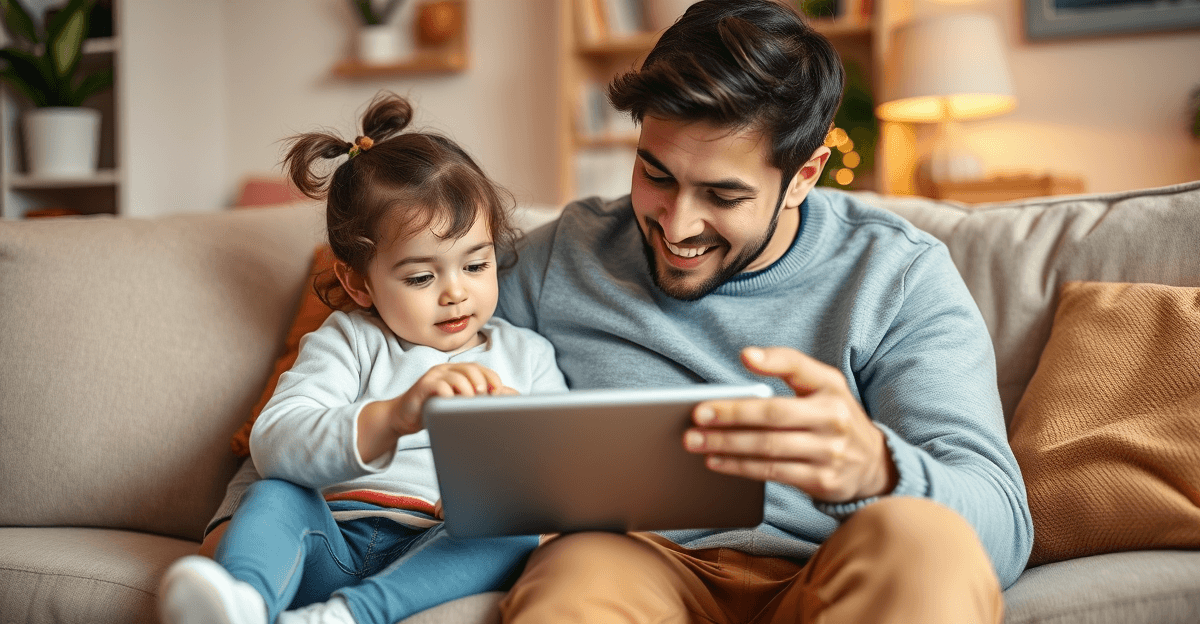
The Singapore Reality Check
Let me set the scene: it's Sunday afternoon, my toddler is watching Cocomelon for the third time today, my 5-year-old is playing some game on the iPad, and I'm scrolling my phone while telling them both to "reduce screen time." The irony is not lost on me.
Singapore children have among the highest screen time in the world. A 2025 NUS study found the numbers are sobering:
- Children aged 2-5: Average 3.2 hours of screen time per day (recommended: 1 hour)
- Children aged 6-12: Average 4.5 hours per day (recommended: 2 hours)
- Teenagers 13-17: Average 6.8 hours per day
> TL;DR: Singapore's HPB recommends zero screen time under 18 months, max 1 hour/day for ages 2-5, and max 2 hours/day for ages 6+. Content quality and co-viewing matter more than strict time limits. The most important rules: no screens within 1 hour of bedtime (disrupts sleep by 30 minutes), and replace passive watching with interactive, parent-guided screen use.
We're in a screen-heavy society, and pretending otherwise helps nobody. The goal isn't eliminating screens (unrealistic in modern Singapore) but managing them with some intelligence.
What the Research Actually Shows
The screen time debate is oversimplified in most parenting articles. Here's where the evidence actually stands as of 2026.
What's Clearly Harmful (Strong Evidence)
Sleep disruption. Blue light suppresses melatonin. Children who use screens within 1 hour of bedtime take an average of 30 minutes longer to fall asleep. This is one of the most well-established effects, and it's the hill I'm willing to die on with my kids.
Reduced physical activity. Every hour of screen time displaces roughly 30 minutes of active play. For young kids, this matters for motor development and fitness.
Language delays in under-2s. Babies learn language almost exclusively from live human interaction. Videos and apps — even "educational" ones — don't teach language to this age group. Multiple studies confirm this.
Attention span issues. Heavy screen use (3+ hours daily) in children under 5 is associated with attention difficulties at school age. Fast-paced content trains the brain to expect constant stimulation.
What's More Complicated
Content quality matters more than raw minutes. One hour of a parent and child watching a nature documentary together and discussing it is fundamentally different from one hour of random YouTube autoplay.
Co-viewing reduces harm. When you watch or use screens together with your child, discussing content and asking questions, the negatives drop significantly and the educational value rises.
Educational apps can help (ages 3+). Well-designed apps that require active participation and adapt to the child's level can improve specific skills. The key: limited duration and genuine interactivity.
Video calls are different. FaceTime with grandparents is not the same as watching cartoons. Children as young as 2 benefit from video call interactions with familiar people.
What We Don't Know Yet
- Long-term effects of early tablet use on brain development (studies are ongoing)
- Whether educational screen time is genuinely beneficial or just less harmful
- Optimal amounts for different ages (current guidelines are conservative best-guesses)
- Specific impact of different content types
Singapore's Official Guidelines
Here's what HPB recommends:
Under 18 months: No screen time except video calls
18 months to 2 years: Minimal. If introduced, only high-quality content with a parent watching alongside
Ages 2 to 5: No more than 1 hour per day. High-quality, age-appropriate content
Ages 6 and above: No more than 2 hours of recreational screen time per day (homework doesn't count)
For all ages: No screens during meals, no screens within 1 hour of bedtime, and daily screen-free family time
What Actually Works in Practice
For Toddlers and Preschoolers (Ages 2-5)
Use a physical timer. Not your phone — a physical timer the kid can see counting down. When it's done, screens are done. Consistency matters more than the exact number of minutes.
Curate the content yourself. Don't let the algorithm decide. Pre-select shows and apps. Solid options for Singapore kids: CBeebies, Sesame Street, Khan Academy Kids app, Busy Shapes, Toca Boca apps.
Watch together. "What colour is that bird?" "What do you think happens next?" Asking questions transforms passive watching into active learning. Even five minutes of co-viewing makes a difference.
Protect key times. No screens during meals, during car rides (use that time for conversation), the hour before bedtime, and the first hour after waking up. These are the zones where habits form.
For Primary School Kids (Ages 6-12)
Create a weekly screen budget. Give your child 14 hours of recreational screen time per week and let them decide how to spend it. This teaches self-regulation and time management better than daily policing.
Separate school screens from play screens. A laptop for homework is not "screen time." But make sure homework devices don't have games or YouTube installed.
Active time before screen time. HPB recommends 60 minutes of physical activity daily. Simple rule: do something active first, then screen time.
Make rules together. Kids who help create screen time rules are more likely to follow them. Write them down and stick them on the fridge.
For Teenagers (Ages 13+)
Shift from control to conversation. Teenagers need increasing autonomy. Instead of strict limits, have ongoing discussions about healthy technology use.
Model what you preach. Teenagers detect hypocrisy instantly. If you're on your phone during dinner, don't expect them to put theirs away.
Focus on sleep. The single most important rule for teens: no phones in the bedroom after a set time. Charge phones in a common area overnight.
Talk about digital citizenship. Cyberbullying, privacy, misinformation, and social media comparison are bigger risks than screen time itself for teenagers.
Setting Up Your Home
Device-free zones. Dining table and bedrooms — no screens. If devices are physically elsewhere, willpower isn't needed.
Central charging station. All devices park in the living room overnight. This is the single most effective household rule we've implemented.
Parental controls as a safety net. Set up Screen Time (iOS) or Family Link (Android). Not as surveillance, but as guardrails.
Keep alternatives accessible. The best way to reduce screen time is to replace it with something engaging. Board games, outdoor play, cooking together, arts and crafts, library books. Keep supplies visible and within reach.
Rethink your living room. If the TV is the centrepiece, screens will dominate. Consider rearranging so conversation, play, or reading takes centre stage.
Warning Signs: When It's Becoming a Problem
- Meltdowns when the screen is taken away
- Loss of interest in activities they used to enjoy
- Consistently disrupted sleep
- Declining social interactions with friends
- Secretiveness about device use
- Significant drop in physical activity
- School performance sliding
If you see these patterns, reduce screen time gradually (cold turkey usually backfires), increase alternative activities, and consider talking to your child's paediatrician or a family counsellor.
On the Guilt
I know many parents feel guilty about screen time. Here's perspective:
- Some screen time is fine and can even be beneficial when managed well
- Using a tablet to buy 30 minutes of cooking time doesn't make you a bad parent
- The occasional over-limit day during illness or travel isn't going to cause lasting damage
- What matters is the overall pattern, not any single day
The goal is not perfection. It's intentionality. A family that thinks about screen time and makes conscious choices — even imperfect ones — is doing better than a family that's never discussed it.
Singapore Resources
Health Promotion Board: Screen time guidelines and resources at hpb.gov.sg
National Library Board: Free storytelling sessions and reading programmes at nlb.gov.sg — a fantastic screen-free activity
ActiveSG: Affordable sports and swimming programmes at activesgcircle.gov.sg
Klook: Book discounted family attractions and activities — great for planning screen-free outings
TOUCH Community Services: Digital wellness workshops for families at touch.org.sg
Sources
1. Health Promotion Board — Screen Time Recommendations 2. IMDA — Digital Readiness and Literacy 3. National Library Board — Children's Programmes 4. Sport Singapore — ActiveSG Youth Programmes 5. SingHealth — Effects of Screen Time on Children
Want to make learning fun with screens? QuizKin offers interactive educational quizzes that kids can do together with parents — the kind of active screen time that actually counts.
Frequently Asked Questions
How much screen time is recommended for children in Singapore?
Singapore's Health Promotion Board recommends zero screen time for children under 2, no more than 1 hour per day for ages 2-5, and no more than 2 hours of recreational screen time for ages 6 and above. These align with WHO guidelines.
Is all screen time equally bad for children?
No. Research distinguishes between passive consumption (watching YouTube, scrolling social media) and active engagement (educational apps, video calls with family, creative tools). Active, guided screen time with parental involvement is significantly less harmful and can even be beneficial.
What are the signs of too much screen time in children?
Watch for: difficulty sleeping, reduced interest in non-screen activities, irritability when devices are taken away, declining social skills with peers, reduced physical activity, eye strain (rubbing eyes, headaches), and difficulty concentrating during non-screen tasks.
You might also like
Get Weekly Parenting Tips
Get practical parenting guides on costs, schools, and subsidies. No spam.
Related Articles
Managing Screen Time for Toddlers: Singapore Parent Guide to Healthy Limits
Practical guide for Singapore parents on managing toddler screen time — what WHO and HPB recommend, age-appropriate limits, and realistic tips that actually work.
Online Safety for Children in Singapore: A Parent Complete Guide
Practical guide to keeping kids safe online in Singapore — screen time rules, parental controls, cyberbullying, IMDA regulations, and age-by-age digital safety tips.
Best Educational Apps for Preschoolers in Singapore (2026 Review)
Curated list of the best educational apps for preschoolers in Singapore. Covers literacy, numeracy, Chinese language, and creative apps — with honest reviews and age recommendations.